

Previous experienceBusinesses subject to Value Added Tax
Tax Agency registration No. 30001887 — registered to act and correspond on your behalf before the FTA.
Verify on the FTA registerOpens the FTA's official register filtered to this entry (20043873).
Accounting, tax and controls that fit how your sector works
The same UAE laws apply to every business — but revenue, VAT, inventory and risk look different in a clinic, a contractor or a trading company. Eight sectors, the accounting, tax and control needs we set up first in each, and the services that meet them.


Eight sectors, one method
The questions change by sector; the standard of the work does not.









 Real estateConstructionTradingManufacturingHealthcareHospitalityTechnologySMEsReal estateConstructionTradingManufacturingHealthcareHospitalityTechnologySMEs
The same laws, applied to very different numbers
VAT, Corporate Tax and the accounting standards accepted in the UAE apply to every business. What changes by sector is where revenue is recognised, how each supply is taxed, what sits in inventory or work-in-progress, and which controls actually protect the margin.
That is what we set up first — before the first return is due, not after. Each sector below lists the characteristic challenge, what needs to be in place, and the services that meet it.
Revenue and timing
Progress claims, subscriptions, off-plan sales and daily covers are all revenue — recognised on different bases and at different moments.
VAT follows the supply
The treatment depends on what is supplied, to whom and where — not on the industry label. We set it per supply type and apply it consistently.
Inventory, WIP and costing
Stock, work-in-progress and product costs decide the real margin — and they are where year-end questions concentrate.
Controls that fit the risk
Cash-heavy outlets, insurer receivables and project retentions each need different checks. Controls are designed for the risk, not copied from a template.
The first question each sector asks
Typical questions, answered in one paragraph each and routed to the service that answers them properly. Not a description of client work.
- Real EstateWhich of our supplies is zero-rated, exempt or standard-rated?
- ConstructionWhen is VAT due on a progress claim — and on retention?
- Trading & RetailWhat changes when goods move through a designated zone?
- ManufacturingIs our free-zone manufacturing income qualifying?
- HealthcareWhich of our services are zero-rated?
- Hospitality & TourismHow are service charges and tourism fees treated?
- TechnologyWhere is our software supply taxed?
- SMEs & StartupsShould we elect Small Business Relief?
Real Estate
Developers, brokers and property managers work with escrow accounts, off-plan sales and long project cycles — and with VAT treatments that change by the type of supply.
Which of our supplies is zero-rated, exempt or standard-rated?
It depends on the supply, not the company: new residential within three years of completion is zero-rated, later residential exempt, commercial standard-rated, bare land exempt. We set the treatment per supply type and document it.
Source · Federal Decree-Law No. 8 of 2017 (VAT) and its Executive RegulationVAT ServicesWhen do we recognise off-plan revenue?
On the basis your sale contract actually supports — over time where control passes progressively, otherwise on handover. The choice changes both the financial statements and the Corporate Tax computation.
Source · IFRS as accepted in the UAEFinancial ReportingDo our escrow releases match our books?
Rarely without a deliberate month-end close: escrow releases, progress and revenue live in three systems. Project-level books with an escrow reconciliation close the gap.
Source · IFRS as accepted in the UAEAccounting & BookkeepingConstruction
Contractors and sub-contractors live on progress: work-in-progress, certified valuations, retentions held for months and variations that change the contract value part-way through.
When is VAT due on a progress claim — and on retention?
At the earliest of invoice, payment or twelve months from the start of the supply, for each claim; retention is taxed when it is invoiced or received. Contract accounting has to carry those dates.
Source · Federal Decree-Law No. 8 of 2017 (VAT) and its Executive RegulationVAT ServicesHow do we recognise revenue on a two-year contract?
Over time, on a measure of progress your contract and records support — certified value, cost-to-cost or milestones. The same measure feeds the Corporate Tax computation.
Source · IFRS as accepted in the UAEFinancial ReportingWhich costs belong in work-in-progress?
Direct materials, labour and site overheads for uncertified work; retentions receivable and payable are tracked separately. A monthly WIP schedule is what an auditor and a lender both ask for.
Source · IFRS as accepted in the UAEAccounting & BookkeepingContract-level books that follow the project
- Contract-by-contract WIP and margin tracking
- Retention and advance accounting that matches the contract terms
- VAT timing on progress claims and retention releases
- Cash-flow visibility per project, not just per company
Related services

Trading & Retail
High invoice volumes, imports and exports, and inventory that has to reconcile to both the books and the VAT return — every day, not just at year-end.
What changes when goods move through a designated zone?
Movements within and between designated zones can fall outside the scope of VAT, while a release into the mainland is an import. The treatment follows the movement, so the stock system has to record where the goods are.
Source · Federal Decree-Law No. 8 of 2017 (VAT) and its Executive RegulationVAT ServicesAre our POS totals reconciled to the VAT return?
They should be, monthly: sales by tax code, refunds, discounts and deemed supplies. When the reconciliation exists, the return is prepared from the ledger — not rebuilt from reports.
Source · IFRS as accepted in the UAEAccounting & BookkeepingWill our invoices carry the e-invoicing data fields?
Only if the item master, customer master and tax codes are complete. A readiness review lists the fields your system can and cannot produce today.
Source · Ministry of Finance e-invoicing programmeE-Invoicing readinessManufacturing
Raw materials, work-in-progress and finished goods move through the plant while overheads, scrap and yield decide the real margin.
Is our free-zone manufacturing income qualifying?
Manufacturing of goods or materials is a qualifying activity, but the 0 % rate also needs adequate substance, audited financial statements and non-qualifying revenue within the de-minimis limit. Each condition is tested, then documented.
Source · Federal Decree-Law No. 47 of 2022 (Corporate Tax) and its decisionsCorporate TaxDo we hold the evidence for zero-rated exports?
Zero-rating needs the customs and commercial evidence kept with the invoice. A VAT health check reads the export file the way the FTA would.
Source · Federal Decree-Law No. 8 of 2017 (VAT) and its Executive RegulationVAT ServicesWhat is our true unit cost?
Materials, labour and absorbed overhead, corrected for scrap and rework and proven by the stock count. When the costing runs inside the accounting system, the margin is known before the month ends.
Source · IFRS as accepted in the UAEManagement AccountingCosting that reflects how you actually produce
- A costing method that reflects how you actually produce
- Inventory valuation that holds up at year-end
- Overhead absorption and variance reporting by product line
- Fixed-asset and capital-expenditure records kept for tax
Related services

Four more sectors, in brief
Healthcare, hospitality, technology and SMEs — the same three questions, answered more briefly. Each card links to the services and the reading that apply.
Healthcare
Clinics, medical centres and healthcare providers combine patient billing, insurer receivables and supplies — with VAT rules that treat some healthcare supplies differently from others.
Which of our services are zero-rated?
Preventive and basic healthcare services, as defined in the Executive Regulation; the rest are standard-rated. We assess each revenue stream and document the treatment per service line.
VAT Services- Revenue by payer: patients, insurers and corporate contracts
- VAT treatment assessed per service line and documented
- Insurer receivables reconciled and followed up on a rhythm
- Payroll and licensing costs tracked per practitioner
Eight sectors, one method — the instrument changes, the standard does not.
Hospitality & Tourism
Hotels, restaurants and tourism operators run on daily volume, seasonal peaks, service charges and a mix of guests whose VAT position is not always the same.
How are service charges and tourism fees treated?
Service charges are part of the consideration and taxable; tourism and municipality fees are separate levies that sit outside the VAT base. The till has to separate them from the first day.
VAT Services- Daily revenue and cost-of-sales reporting by outlet
- Consistent VAT treatment of service charges, packages and tourism-related supplies
- Seasonal cash-flow forecasting
- Stock, wastage and purchasing controls
Technology
Software, e-commerce and digital businesses grow fast, sell across borders, and spend on development long before revenue catches up.
Where is our software supply taxed?
Where it is used and enjoyed. Services to a customer outside the UAE can be zero-rated when the conditions are met and evidenced; a mixed customer base needs the rule applied per contract.
VAT Services- A revenue-recognition policy for subscriptions, licences and platform fees
- A clear policy on development costs: capitalised or expensed
- VAT treatment of cross-border digital supplies
- Investor-ready reporting and runway visibility
SMEs & Startups
Small businesses, startups and free zone companies need the fundamentals done right from day one — without a finance function they cannot yet afford.
Should we elect Small Business Relief?
If revenue is within AED 3,000,000 in this tax period and every earlier one, and the period ends on or before 31 December 2029, you can elect to be treated as having no taxable income for it — but that period's loss cannot be carried forward and the return is still filed. Decide on your numbers, in writing.
Corporate Tax- Setup, registrations and a chart of accounts built for how you trade
- Monthly bookkeeping that keeps VAT and Corporate Tax filings routine
- An assessment of Small Business Relief eligibility under Corporate Tax
- Right-sized reporting that grows with you
The year, for every sector
The same four dates reach every business; what differs is the work behind each one.
Real clients, in their own words
Three businesses that work with AL TAMAYUZ, on camera — a real estate company among them. No scripts, no star ratings.
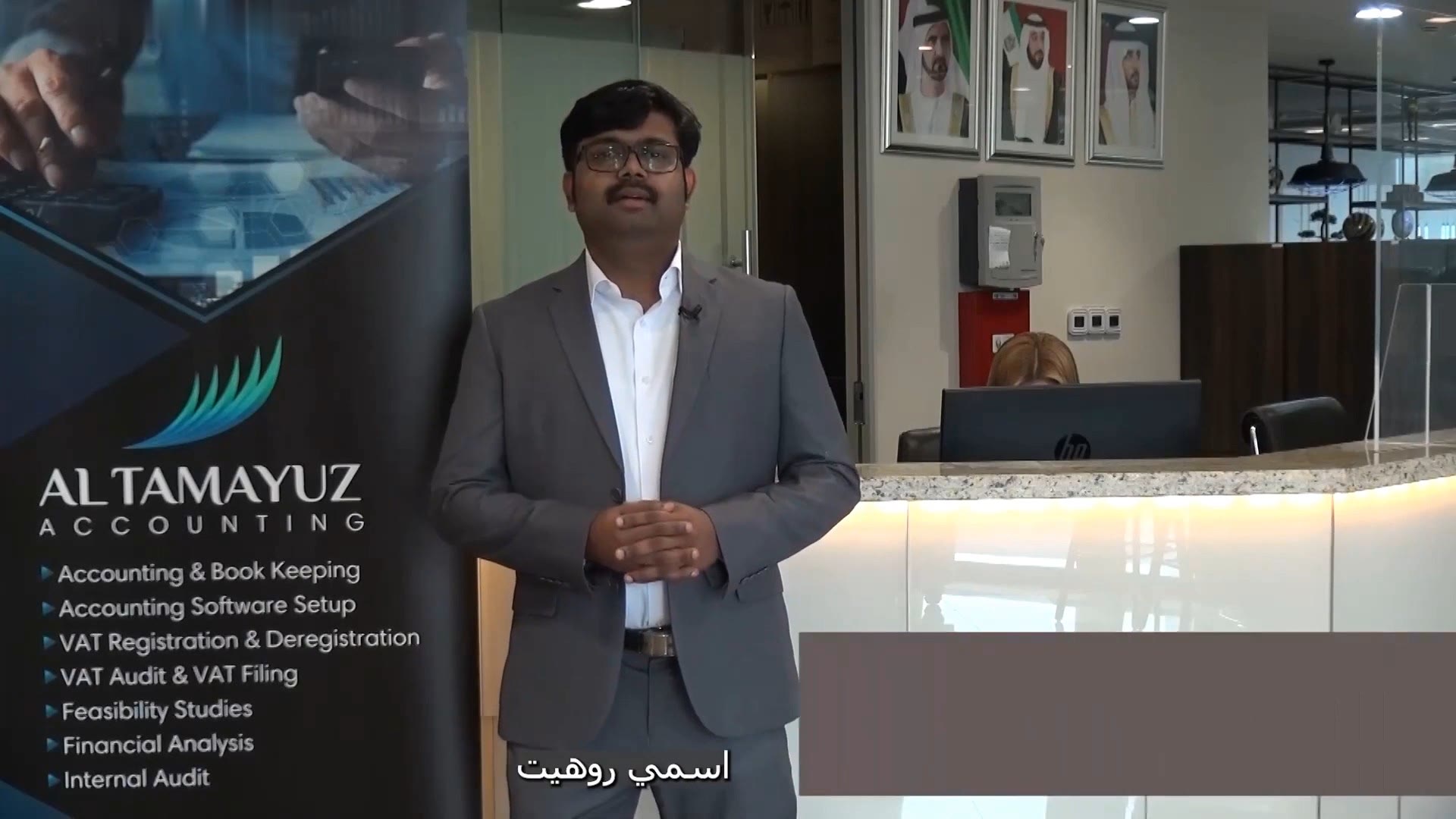 Muted preview — click for sound
 Muted preview — click for sound
 Muted preview — click for sound
Real clients, in their own words. All client stories
Questions businesses ask before they start
Straight answers about fit, hand-over, software and how a sector engagement is scoped and priced.
Yes. The eight sectors here are the ones we meet most often, not a limit. The same method applies to any UAE business: we assess how your revenue, VAT and costs actually behave, then scope the work around that. Tell us what you do and we will say honestly whether we are the right fit.
Either. Some clients hand us the whole finance function; others keep an in-house bookkeeper and use us for month-end review, tax filings and reporting. We agree the split in writing at scoping, so responsibilities and deadlines are clear from the first month.
We work with Zoho, Xero, QuickBooks, Tally, Sage and Wave, and we can set up or migrate a system for your sector — stock and margins for retail, projects for contractors, subscriptions for technology. If you already have a system that works, we keep it.
We prepare you for your auditor rather than issue the audit opinion ourselves: audit-ready books, reconciled balances, schedules in the format your appointed external auditor expects, and their queries answered with you. Year-end close support and audit-readiness reviews are scoped separately.
Scope first. After a short consultation we define what the engagement covers — bookkeeping, filings, reporting, controls — and you receive a written quote for that scope before any work begins. Sector complexity shapes the scope, not a surcharge.
Yes. We take over from your current accountant or system with a hand-over checklist: opening balances, open VAT periods, project or stock records in progress, and the filings due next. Nothing is redone for its own sake; we correct what needs correcting and carry on.
Tell us what you do — we will tell you what needs to be in place
A short conversation about your sector, your systems and where the numbers hurt today. Then a clear scope and a written quote before any work begins — whichever of the twelve service lines it turns out you need.
Book a sector consultation
A specialist who knows your sector responds promptly.
We use your details only to respond to your request.
Where most sector engagements start
Sector knowledge, one accountable partner
Book a consultation and get a clear next step promptly.